
News
Focusing on the company's major milestones, industry events, and authoritative perspectives. Listening to the voices of a benchmark enterprise in the chemical industry.
What affects the cost volatility of key organic intermediates
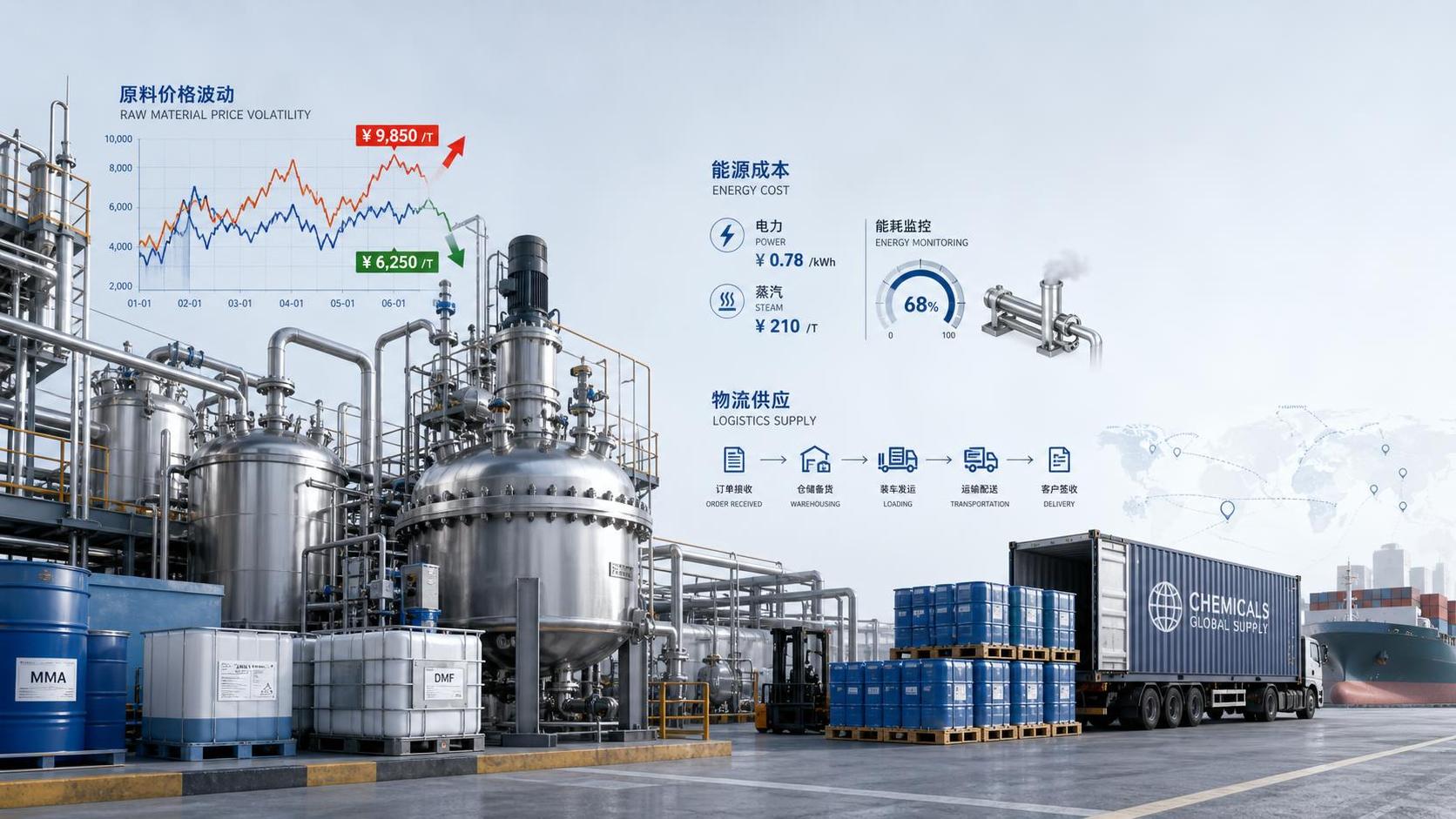
Why organic intermediate prices rarely move for just one reason
For anyone approving budgets in chemical raw materials, price volatility in Organic Intermediates is not just a procurement issue. It affects working capital, customer quotations, inventory exposure, and sometimes the timing of plant loading. The difficult part is that the cost of an intermediate can change quickly even when demand from the end market looks stable. A single number on a supplier quote often reflects several moving layers underneath it: feedstocks, utilities, regulation, logistics, yield, and local operating conditions.
That is why a finance team looking only at last quarter’s average purchase price can miss the real risk. In practice, volatility tends to build when several cost drivers move together. If benzene prices rise, steam and electricity remain high, and freight reliability worsens at the same time, the supplier’s room to absorb pressure becomes limited. Some producers hedge this better than others, but no one is fully insulated.
Feedstock prices set the tone, but not the full story
Many key organic intermediates sit downstream of petrochemical or coal-based value chains. Their cost base often depends on aromatics, alcohols, acids, olefins, or other upstream materials whose prices can move with crude oil, refining margins, regional supply balance, and operating rates at major plants. If the intermediate is only one or two steps away from a volatile feedstock, the transmission is usually faster and more visible.
But finance approvals can go wrong when teams assume feedstock movement translates one-to-one into intermediate pricing. It often does not. Conversion cost matters. So do reaction yield, solvent recovery efficiency, waste treatment load, and whether the process is batch or continuous. Two suppliers exposed to the same raw material may still quote very different prices because one has stronger process control, better catalyst performance, or higher effective capacity utilization.
This is especially relevant for products with stricter purity requirements. When an upstream material drifts in quality, even slightly, reprocessing and quality loss can raise real cost faster than the posted feedstock market suggests. That extra cost usually shows up with a delay, which is why price spikes sometimes look sudden from the buyer side.
Energy and utilities can turn a manageable market into a difficult one
In organic synthesis, utilities are not background noise. Steam, electricity, cooling water, thermal oil, compressed air, and sometimes nitrogen or chilled systems can materially affect cost. For some intermediates, utility spend is modest relative to feedstock. For others, especially energy-intensive reaction and separation steps, it becomes a major swing factor.
This matters because energy prices do not always move in sync with chemical demand. A period of weak downstream consumption does not automatically mean lower manufacturing cost. Regional power restrictions, gas price shocks, or seasonal utility pressure can push up production cost even in a soft sales market. Buyers then wonder why prices are not falling as expected.
A practical check during supplier evaluation is to ask how energy-intensive the route is and whether the plant relies on purchased utilities or has some integrated advantage. Even without exact cost breakdowns, this helps distinguish temporary pricing noise from structural cost risk.
Environmental compliance is a real cost driver, not just a policy headline
Organic intermediates often involve solvents, by-products, emissions control, and wastewater treatment requirements that can materially change operating cost. In tighter regulatory periods, the market tends to focus on shutdown news, but the bigger financial effect is often less dramatic and more persistent: higher ongoing compliance cost, lower effective operating rates, and more cautious scheduling by producers.
When a process generates difficult waste streams, disposal and treatment can become one of the first hidden reasons behind quote volatility. This is easy to overlook in budgeting because waste handling rarely appears as a separate line item in commercial offers. Yet suppliers serving regulated industrial zones or facing stricter local inspections may have a materially different cost structure from competitors in other regions.
There is also a second-order effect: compliance pressure can remove marginal capacity from the market. Even if no regulation directly targets the product you buy, the closure or restriction of upstream plants, toll manufacturers, or shared treatment facilities can tighten supply enough to move prices quickly.
Capacity is not the same as available supply
One of the most common mistakes in cost forecasting is relying on nominal capacity announcements. On paper, a market may appear well supplied. In reality, available supply can be much tighter because plants are running below nameplate, campaigns are scheduled around more profitable products, or certain grades are harder to make consistently.
This is common in multi-product chemical facilities. If a manufacturer can switch equipment toward products with better margins, your intermediate may become less available long before industry capacity looks constrained. From a finance perspective, that creates a specific risk: the average annual market price may look acceptable, but spot replacement cost can become painful when supply allocation starts.
Maintenance turnarounds and unplanned outages also matter more in concentrated supply chains. If only a limited number of qualified producers can make a given intermediate at the required specification, one disruption can change negotiating leverage very quickly.
Logistics and inventory timing still move the final number
For many chemical buyers, logistics is treated as a separate line after the product price is discussed. Operationally, though, transport cost, packaging availability, route reliability, and port handling can all feed back into the quoted price. Hazard classification, temperature sensitivity, and storage requirements make this more pronounced for some organic intermediates than for standard bulk chemicals.
Lead time risk is just as important as freight cost. A delayed shipment can force emergency purchases at higher prices, especially when production plans leave little buffer stock. Financially, this is not only a procurement issue; it changes inventory strategy. Carrying more stock may look expensive on paper, but in a market with unstable supply and long replenishment cycles, too little inventory can be the costlier choice.
There is no universal right buffer level. It depends on shelf life, storage compliance, demand predictability, and how easily alternative suppliers can be qualified. But the core point is simple: a low quoted price is less valuable if it comes with a fragile delivery profile.
Demand swings are often indirect
End-use demand for pharmaceuticals, agrochemicals, dyes, coatings, electronics, or specialty materials can all influence intermediate pricing, but usually not in a clean, linear way. Some organic intermediates serve multiple downstream sectors, which means one weak market may be offset by strength in another. Others depend heavily on a narrow seasonal or regulatory demand pattern.
For budget owners, the key question is not simply whether demand is “up” or “down.” It is whether the demand mix is changing in a way that affects the grade, purity, or delivery cadence you need. A supplier may still have volume available, but not in the packaging format, specification window, or shipment schedule your plant requires. Those frictions often raise effective procurement cost without showing up in broad market commentary.
Exchange rates and contract structure can amplify volatility
In cross-border sourcing, currency movement can quietly widen cost swings. Even when the producer’s domestic manufacturing cost is stable, exchange rate shifts may change export pricing, payment timing risk, and the competitiveness of alternative origins. The effect is stronger when suppliers purchase key raw materials in one currency and sell finished intermediates in another.
Contract design also matters more than many finance teams expect. A fixed price may reduce short-term volatility, but only if volume commitment, index assumptions, and specification terms are realistic. Otherwise, the supplier may protect itself through stricter allocation, limited flexibility, or a higher starting price. On the other hand, fully spot-based buying can look efficient in a falling market and become very expensive when supply tightens suddenly.
What financial approvers should actually test before signing off
A useful review goes beyond comparing three quotes. It usually helps to challenge the purchase plan on a few practical points:
- How exposed is the product to a single volatile feedstock or utility source?
- Is the supplier offering a price from integrated production, toll manufacturing, or trader inventory?
- How many qualified production sites are realistically available for the required grade?
- What part of the total cost risk comes from logistics, not ex-works price?
- Does the contract mechanism fit the product’s actual volatility pattern?
- What is the cost of a supply interruption compared with the cost of holding additional inventory?
These questions do not eliminate volatility, but they improve decision quality. In many cases, the cheapest offer is only cheaper if everything goes right.
A more realistic way to read the market
The cost volatility of key Organic Intermediates is usually the result of overlapping pressures rather than a single market event. Feedstocks may trigger the move, but energy, compliance, capacity discipline, logistics, and demand mix often determine how far it goes and how long it lasts. That is why budgeting based on broad commodity trends alone tends to underperform in this category.
A better approach is to separate temporary noise from structural exposure. If a price jump is driven mainly by short-term freight disruption, the response may be tactical. If it reflects a tighter regulatory environment, more expensive utilities, and fewer reliable producers, then the purchasing strategy probably needs to change as well. For financial approval, that distinction is where most of the value sits.
When reviewing the next sourcing request, it is worth asking not just whether the quoted price is acceptable today, but which part of that price is most likely to move before the next buying cycle. That answer is rarely perfect, but it is usually much more useful than last month’s average.
Navigation
- How pharmaceutical raw materials are checked for GMP compliance
- What to check before switching suppliers of chemical raw materials
- Where inorganic chemicals still hold an advantage over organic options
- What affects the cost volatility of key organic intermediates
- When do water treatment chemicals fail to control scaling effectively
Send Us A Message